



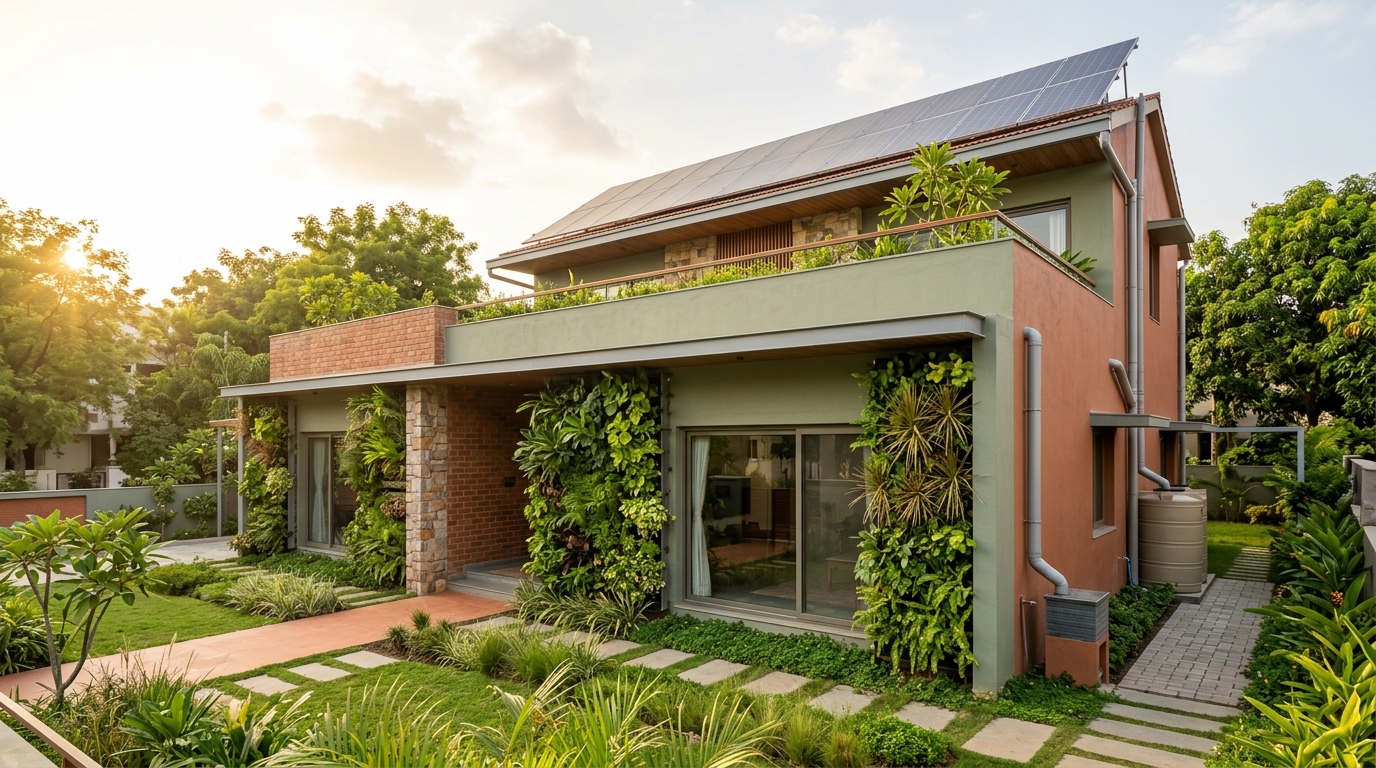
Sustainable Construction Best Practices in Vadodara 2026
If you’re building a new home in Gotri or Waghodia Road and your contractor hasn’t once mentioned rainwater harvesting, energy-efficient insulation, or fly-ash bricks — that’s a problem. Sustainable construction in Vadodara is no longer a luxury reserved for large commercial projects; it’s a practical, cost-saving approach that every homeowner should demand from day one. With material costs rising 12–18% post-2022 and Vadodara’s Smart City push accelerating green building norms, building sustainably today means lower utility bills, longer-lasting structures, and a healthier living environment for your family. Book a Free Site Visit with our team to understand how green practices apply to your specific plot and budget.
2026 Cost Guide for Sustainable Construction in Vadodara
One of the first questions every homeowner asks is: does going green cost more? The honest answer is — it costs slightly more upfront but significantly less over 5–10 years. In Vadodara’s current market, sustainable construction adds roughly 8–20% to your base construction cost, depending on which green features you choose to include.
Below is a comprehensive cost table covering the most commonly adopted sustainable construction elements in Vadodara, including both materials and labour combined. These figures reflect the 2026 Gujarat market rates and account for post-inflation pricing.
| Sustainable Feature | Low Tier (INR) | Mid Tier (INR) | Premium Tier (INR) |
|---|---|---|---|
| Fly-Ash Brick Construction (per sq ft, incl. labour) | ₹180–₹220 | ₹230–₹280 | ₹290–₹360 |
| Rainwater Harvesting System (per unit, installed) | ₹25,000–₹40,000 | ₹45,000–₹80,000 | ₹90,000–₹1,50,000 |
| Solar Panel Installation (per kW, incl. setup) | ₹55,000–₹65,000 | ₹68,000–₹85,000 | ₹90,000–₹1,20,000 |
| Thermal Insulation (roof/walls, per sq ft) | ₹35–₹55 | ₹60–₹90 | ₹95–₹150 |
| Double-Glazed / Energy-Efficient Windows (per sq ft) | ₹450–₹600 | ₹650–₹900 | ₹950–₹1,400 |
| Sewage Treatment / Greywater Recycling (per unit) | ₹60,000–₹90,000 | ₹1,00,000–₹1,60,000 | ₹1,75,000–₹3,00,000 |
| Low-VOC Paints & Eco Finishes (per sq ft) | ₹18–₹28 | ₹30–₹45 | ₹50–₹80 |
| Full Green Home Construction (per sq ft, all-inclusive) | ₹1,600–₹2,000 | ₹2,100–₹2,800 | ₹3,000–₹4,500+ |
Contractor Insight: In Vadodara’s hot and semi-arid climate, investing in thermal insulation and energy-efficient windows gives the fastest ROI — most homeowners recover the added cost within 3–4 years through reduced AC electricity bills alone.
Material Selection Guide for Vadodara’s Climate
Vadodara experiences extreme summers (touching 44°C), moderate monsoons, and mild winters. Material selection for ghar bandhkam must account for heat retention, moisture resistance, and structural durability specific to this climate. Generic material choices from North Indian or coastal markets often fail here.
The right materials reduce cooling loads, prevent dampness, and lower long-term maintenance costs. Here’s what works best for sustainable construction in Vadodara in 2026:
- Fly-Ash Bricks: Lighter than red clay bricks, better thermal insulation, and made from industrial waste — ideal for all load-bearing and partition walls in Vadodara’s heat.
- AAC Blocks (Autoclaved Aerated Concrete): Brands like Siporex and Aerocon offer excellent thermal performance and are widely available in Gujarat. Reduces wall thickness while improving insulation.
- Reflective Roof Coatings: Products like Asian Paints SmartCare Cool Roof or Berger WeatherCoat reduce roof surface temperature by up to 20°C — essential for Vadodara summers.
- Recycled Steel Reinforcement: Locally sourced TMT bars from SAIL or Tata Steel with higher recycled content reduce embodied carbon significantly.
- Bamboo-Based Composites: For interior flooring and panelling, bamboo composites are durable, moisture-resistant, and sustainably sourced.
- Low-VOC Paints: Dulux Weathershield, Asian Paints Royale Aspira, and Nerolac Impressions Eco Clean are available locally and reduce indoor air pollution significantly.
Pro Tip: Always ask your contractor for the thermal mass rating of wall materials before finalising. In Vadodara’s climate, high thermal mass materials absorb heat during the day and release it at night, reducing AC dependency by 15–25%.
Avoid materials like single-pane glass, standard red clay bricks fired in wood-burning kilns, and solvent-based paints — all of which are environmentally costly and perform poorly in Gujarat’s climate.
Step-by-Step Process Guide for Green Home Construction
Sustainable construction isn’t a single feature — it’s a systematic process embedded into every phase of your project. Whether you’re building a new home in Manjalpur or doing a floor extension in Vasna-Bhayli, the green approach starts well before the first brick is laid.
Phase 1: Site Assessment and Planning (Week 1–3)
- Conduct a solar orientation study — align the longest walls east-west to minimise direct sun exposure on south-facing walls.
- Assess natural drainage patterns on the plot for effective rainwater harvesting design.
- Evaluate existing vegetation and plan construction to preserve mature trees where possible.
- Engage a green building consultant or an experienced contractor like JKC Buildcon Services to review your plot before finalising the design.
Phase 2: Design and Material Finalisation (Week 3–6)
- Finalise building orientation, window placement, and cross-ventilation pathways in the architectural plan.
- Select all materials with sustainability certifications — ISI-marked, BIS-approved, or GRIHA-rated where applicable.
- Plan plumbing for dual-pipe systems (fresh water + greywater recycling) from the design stage itself.
Phase 3: Foundation and Structure (Week 6–14)
- Use M20 or higher grade concrete with partial fly-ash replacement (up to 30%) to reduce cement consumption.
- Implement proper waterproofing at the foundation level to prevent future dampness and structural damage.
- Install underground rainwater collection tanks during the foundation phase — far cheaper than retrofitting later.
Phase 4: Envelope and Finishing (Week 14–24)
- Install thermal insulation in roof slabs and external walls before plastering.
- Fit double-glazed windows and doors with proper weatherstripping to prevent heat ingress.
- Apply reflective roof coatings and low-VOC paints during the finishing phase.
Pro Tip: Don’t treat solar panels as an afterthought. Plan conduit routing and roof load calculations during the structural phase — retrofitting solar systems on a completed roof adds 25–40% to the installation cost.
Common Mistakes Homeowners Make in Sustainable Construction
Many Vadodara homeowners approach sustainable construction with good intentions but end up making costly errors — often because of incomplete information or pressure from contractors to cut corners. Here are the four most common mistakes we see repeatedly.
Mistake 1: Treating Green Features as Add-Ons
The biggest mistake is deciding to “add” sustainability after the main construction plan is already fixed. Rainwater harvesting, solar routing, and insulation work best when designed from the start — not bolted on at the end. Retrofitting these systems can cost 2–3x more than integrating them during construction.
Mistake 2: Choosing Materials Based on Price Alone
Opting for the cheapest available bricks or paint because they look similar to premium eco-options is a false economy. Low-quality fly-ash bricks from unverified suppliers often have poor compressive strength and absorb moisture — negating their thermal benefits entirely. Always ask for ISI certification and test reports.
- Verify fly-ash brick compressive strength: minimum 7.5 N/mm²
- Check AAC block density: 550–650 kg/m³ for best insulation performance
- Demand VOC content data sheets for all paints and adhesives
Mistake 3: Ignoring Passive Design Principles
Many homeowners spend lakhs on solar panels and energy-efficient appliances but ignore basic passive design — like window placement, shading, and cross-ventilation. Passive design is free and can reduce cooling loads by 30–40% before any active system is even switched on. A south-facing glass wall in Vadodara without shading will defeat every green investment you make.
Mistake 4: Skipping the Post-Construction Commissioning Check
Once construction is complete, homeowners often skip the commissioning phase — checking that all green systems actually work as designed. Rainwater harvesting pipes get clogged, solar panels are installed at wrong angles, and insulation layers are left incomplete — all of which are invisible until your first electricity bill arrives. Always insist on a documented commissioning report from your contractor.
Permits and Legal Requirements in Vadodara for Sustainable Construction
Vadodara Municipal Corporation (VMC) has progressively tightened building regulations to align with Gujarat’s green building push under the Smart City Mission. As of 2026, certain sustainable features are not optional — they are legally mandated for specific project sizes.
Mandatory Requirements (VMC 2026 Norms)
- Rainwater Harvesting: Mandatory for all new residential plots above 300 sq mt and all commercial buildings. Non-compliance can result in building plan rejection or occupancy certificate denial.
- Solar Water Heating: Mandatory for residential buildings with more than 12 dwelling units and all hotels/hostels above a certain floor area.
- Sewage Treatment Plant (STP): Required for residential complexes above 50 units and all commercial projects above 2,000 sq mt built-up area.
- Energy Conservation Building Code (ECBC): Applicable to commercial buildings above 500 sq mt — governs insulation, glazing, and HVAC specifications.
Permits You Need Before Starting
- Building Plan Approval: Submit to VMC’s Town Planning Department with green feature details included in the plan.
- NOC for Borewell/Water Harvesting: Required if you’re integrating groundwater recharge structures.
- GEDA Registration: For solar panel installations above 1 kW, register with the Gujarat Energy Development Agency (GEDA) to avail net metering and subsidy benefits.
- GRIHA or IGBC Green Rating: Optional but recommended for premium projects — adds resale value and attracts lower home loan interest rates from select banks.
Contractor Insight: GEDA subsidies for solar installations in Gujarat in 2026 can reduce your net solar cost by ₹14,588 per kW for systems up to 3 kW. Always apply before installation — not after — to qualify for the subsidy.
At JKC Buildcon Services, we assist homeowners with documentation and plan submissions that incorporate all mandatory green features — ensuring your building approval process is smooth and compliant from day one.
Maintenance Guide for a Sustainable Home in Vadodara
Building sustainably is only half the job. Maintaining your green systems correctly ensures they continue delivering the promised energy and water savings year after year. Neglected rainwater systems, dirty solar panels, and deteriorating insulation can eliminate all the benefits within just 2–3 years.
Annual Maintenance Checklist
- Solar Panels: Clean panels every 2–3 months (more frequently during Vadodara’s dusty summers). Annual inspection of inverters, wiring, and mounting brackets. Check for bird nesting under panels.
- Rainwater Harvesting System: Clean filter mesh and first-flush diverters before every monsoon season (ideally in May). Inspect underground tanks for sediment buildup every 2 years.
- Thermal Insulation: Inspect roof insulation for moisture ingress annually — especially after heavy monsoon. Damaged insulation loses up to 60% of its effectiveness.
- Low-VOC Painted Surfaces: Eco-paints may need touch-ups every 4–5 years on exterior surfaces. Use the same brand and formulation for consistent performance.
- Double-Glazed Windows: Check weatherstripping seals annually. Failed seals allow moisture between panes and reduce thermal performance significantly.
- Greywater Recycling Systems: Clean filters monthly. Inspect pump and distribution lines every 6 months.
Seasonal Maintenance Tips for Vadodara’s Climate
- Pre-Summer (March–April): Clean solar panels, apply reflective roof coating touch-ups, check all AC units for efficiency.
- Pre-Monsoon (May–June): Clear all rainwater harvesting inlets, inspect waterproofing on terraces and external walls, check drainage slopes.
- Post-Monsoon (October): Inspect walls for seepage, check insulation integrity, clean solar panels of monsoon grime.
Pro Tip: Keep a home maintenance logbook with dates of all inspections and repairs. This is invaluable when selling your home — buyers and banks offering green home loans will ask for service records of sustainable systems.
How to Choose the Right Contractor in Vadodara for Sustainable Construction
Finding a contractor who genuinely understands sustainable construction — not just one who uses the word “eco-friendly” as a marketing term — is the most critical decision you’ll make. In Vadodara’s growing construction market, many contractors claim green expertise without the actual knowledge or experience to back it up.
Here are five practical criteria to vet any contractor before signing a contract for your ghar sudharo or new construction project:
- Ask for Completed Green Projects: Request site visits to at least 2–3 completed projects where they incorporated sustainable features. Don’t accept photos alone — visit the actual sites and speak to the homeowners.
- Verify Material Knowledge: A credible contractor should be able to explain the difference between AAC blocks and fly-ash bricks, recommend specific brands suitable for Vadodara’s climate, and provide material test certificates without being asked.
- Check for GRIHA/IGBC Awareness: Even if your project doesn’t require formal green certification, a contractor familiar with GRIHA or IGBC standards will follow best practices automatically.
- Demand Transparent, Itemised Quotations: Sustainable construction involves multiple specialised systems. Any contractor who gives you a single lump-sum quote without itemising materials, labour, and green features separately is not someone you want managing your project.
- Evaluate Post-Construction Support: Ask specifically: will they assist with GEDA solar registration? Will they provide a commissioning report? Do they offer a defect liability period for green systems?
- Check Track Record and Longevity: A contractor with 10+ years of local Vadodara experience will understand site-specific challenges — soil conditions, municipal norms, local material suppliers — far better than a newcomer.
JKC Buildcon Services, co-founded by Kantibhai R C and Chintan K C, brings over 25 years of hands-on construction experience in Vadodara. Their 100% transparent pricing policy means every green feature is costed and documented separately — no hidden charges, no vague estimates. To discuss your sustainable construction project in detail, schedule your free site visit today.
Frequently Asked Questions: Sustainable Construction in Vadodara
Q1: Is sustainable construction significantly more expensive than conventional construction in Vadodara?
Sustainable construction typically adds 8–20% to your upfront construction cost, depending on the green features you choose. However, the long-term savings in electricity, water, and maintenance costs generally offset this premium within 4–7 years. In Vadodara’s hot climate, energy savings from insulation and solar alone can reduce monthly household expenses by ₹3,000–₹8,000, making the investment highly practical rather than just environmentally motivated.
Q2: Is rainwater harvesting mandatory for individual homes in Vadodara?
As per VMC regulations in 2026, rainwater harvesting is mandatory for all new residential plots above 300 sq mt. For smaller plots, it is strongly recommended and may become mandatory in the near future as VMC tightens its building bylaws. Even for plots where it isn’t legally required, installing a basic rainwater harvesting system (costing ₹25,000–₹40,000) significantly reduces your dependence on municipal water supply during Vadodara’s dry summer months. Failure to comply on applicable plots can result in denial of the occupancy certificate.
Q3: Can I make my existing home more sustainable without full demolition and reconstruction?
Absolutely — and this is actually very common in Vadodara’s older residential areas like Alkapuri and Fatehgunj. Retrofit options include installing solar panels, adding reflective roof coatings, replacing single-pane windows with double-glazed alternatives, adding rainwater harvesting to existing plumbing, and switching to low-VOC paints during your next repainting cycle. A phased makaan renovation approach allows you to spread the investment over 2–3 years while progressively reducing your home’s environmental footprint and running costs.
Q4: What GEDA subsidies are available for solar panels in Vadodara in 2026?
The Gujarat Energy Development Agency (GEDA) continues to offer Central Government PM Surya Ghar Muft Bijli Yojana subsidies for residential rooftop solar installations in 2026. The subsidy is ₹14,588 per kW for systems up to 2 kW, and an additional ₹7,294 per kW for the third kW (up to 3 kW total). For systems above 3 kW, no additional subsidy applies. You must register your installation through the national portal before commissioning to qualify. A knowledgeable contractor like JKC Buildcon Services can help you navigate the registration and net metering process with PGVCL (Paschim Gujarat Vij Company Limited).
Q5: How do I verify if the fly-ash bricks my contractor is using are of good quality?
Always ask your contractor for the ISI certification (IS 12894:2002) for fly-ash bricks before any procurement. You can also request a simple field test: a good quality fly-ash brick should not scratch easily with a fingernail, should not show more than 1% water absorption after 24 hours of immersion, and should produce a clear ringing sound when tapped. Avoid bricks that crumble at the edges, show white salt deposits (efflorescence), or come without any documentation. Unverified fly-ash bricks from roadside suppliers in Vadodara’s peri-urban areas are a common quality risk that homeowners should actively guard against.
Conclusion: Build Smarter, Build Sustainably in Vadodara
Sustainable construction in Vadodara in 2026 is not a trend — it’s a practical, financially sound, and increasingly legally required approach to building homes and commercial spaces. From choosing the right materials for Gujarat’s demanding climate to ensuring your rainwater harvesting system is properly commissioned, every decision you make during construction has long-term consequences for your family’s comfort, your utility bills, and the structural health of your building.
The good news is that you don’t have to figure this out alone. JKC Buildcon Services, with over 25 years of experience in Vadodara’s construction market, has helped hundreds of families build durable, efficient, and compliant homes using sustainable best practices. Co-founded by Kantibhai R C and Chintan K C, the company is known for transparent pricing, quality materials, and on-time delivery — values that align perfectly with responsible, sustainable construction.
Whether you’re starting a new ghar bandhkam in Waghodia Road, planning a floor extension in Vasna-Bhayli, or retrofitting your existing home with green features, the right guidance from the start makes all the difference. Don’t wait until construction is halfway done to think about sustainability — the best time to plan is right now. get a free on-site consultation with our team and let’s build something that lasts — for your family and for Vadodara.