



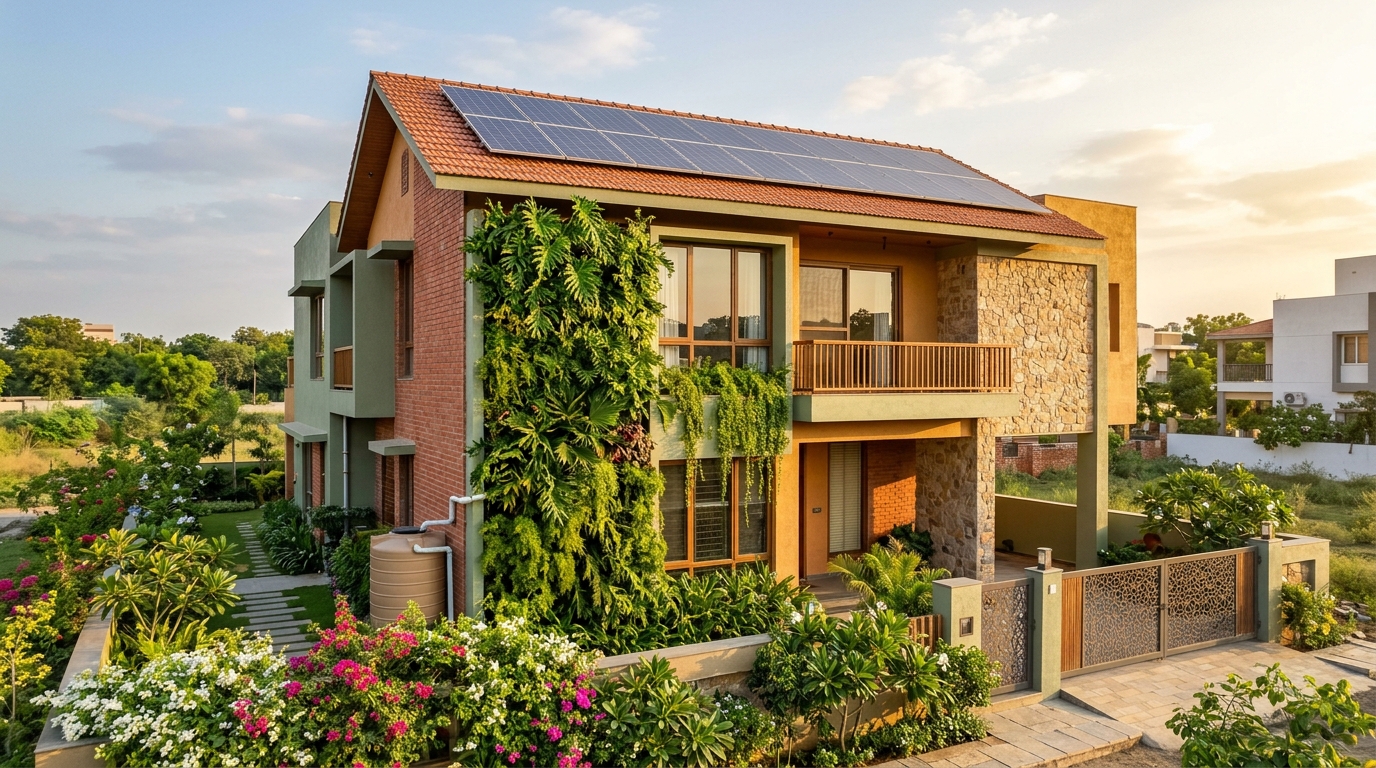
Environmental Considerations for Construction in Vadodara 2026
If you are planning ghar bandhkam in areas like Gorwa, Harni, or Alkapuri, you have probably noticed how quickly Vadodara’s urban landscape is changing. New township developments, Smart City projects, and rapid residential expansion mean that the environmental considerations for construction in Vadodara are no longer optional — they are legally required and practically essential for long-term savings. Before you break ground, understanding how local soil conditions, monsoon patterns, and Gujarat Pollution Control Board norms affect your build can save you lakhs in rework costs. Book a Free Site Visit with our team to assess your site’s environmental profile before construction begins.
Environmental Compliance Cost Guide for Vadodara 2026
Many homeowners in Vadodara are surprised to learn that environmental compliance adds a predictable, budgetable cost to any construction project — not an unpredictable burden. The costs below reflect the current 2026 Vadodara and Gujarat market rates, incorporating the 12–18% material inflation seen since 2022. These figures include both material and labor components together, as they are typically executed as integrated packages by responsible contractors.
| Environmental Feature / Compliance Area | Low Tier (Basic Compliance) | Mid Tier (Standard Green) | Premium Tier (Full Eco-Build) |
|---|---|---|---|
| Rainwater Harvesting System (per unit) | ₹35,000 – ₹55,000 | ₹60,000 – ₹90,000 | ₹1,00,000 – ₹1,80,000 |
| Sewage / Wastewater Treatment (STP) | ₹40,000 – ₹70,000 | ₹80,000 – ₹1,50,000 | ₹1,80,000 – ₹3,50,000 |
| Construction Waste Management (per 1000 sq ft) | ₹8,000 – ₹15,000 | ₹18,000 – ₹30,000 | ₹35,000 – ₹60,000 |
| Dust Suppression and Site Screening | ₹5,000 – ₹12,000 | ₹15,000 – ₹25,000 | ₹28,000 – ₹50,000 |
| Eco-Friendly Insulation and Thermal Walls | ₹45 – ₹80/sq ft | ₹85 – ₹140/sq ft | ₹150 – ₹250/sq ft |
| Solar-Ready Electrical Infrastructure | ₹20,000 – ₹40,000 | ₹45,000 – ₹80,000 | ₹90,000 – ₹1,50,000 |
| VMC Environmental NOC and Documentation | ₹5,000 – ₹10,000 | ₹12,000 – ₹20,000 | ₹22,000 – ₹40,000 |
| Green Landscaping and Permeable Paving | ₹30 – ₹55/sq ft | ₹60 – ₹100/sq ft | ₹110 – ₹180/sq ft |
Contractor Insight: In Vadodara’s 2026 market, homeowners who invest in mid-tier environmental features during initial construction typically recover 60–80% of that cost within 5 years through reduced utility bills and zero penalty fines from VMC.
Permits and Legal Requirements for Eco-Compliant Construction in Vadodara
Vadodara Municipal Corporation (VMC) has significantly tightened its environmental compliance requirements for residential and commercial construction since 2023. If you are planning makaan renovation or new construction above 300 square meters, several mandatory clearances now apply. Ignoring these requirements can result in stop-work notices, demolition orders, or penalties reaching ₹2–5 lakhs.
GPCB and VMC Environmental Norms
The Gujarat Pollution Control Board (GPCB) mandates that construction sites maintain dust suppression measures, proper debris disposal, and noise level compliance (below 75 dB during daytime). VMC’s 2026 building bylaws require rainwater harvesting systems for plots above 200 square meters — this is non-negotiable for new builds. Failure to install these systems can delay your occupancy certificate indefinitely.
- Mandatory for all new residential builds: Rainwater harvesting pit or tank as per VMC specifications
- Required for plots above 500 sq m: Sewage treatment or connection to approved municipal drainage
- Construction waste: Must be disposed of at VMC-designated debris yards — illegal dumping on roads carries fines
- Tree cutting: Requires separate VMC Tree Authority permission; cutting without permission is a criminal offense
- Noise hours: Construction activity permitted only between 6 AM and 10 PM as per GPCB noise rules
RERA and Green Building Compliance
Under Gujarat RERA 2026 regulations, developers and builders are increasingly required to disclose environmental features of projects at the time of registration. For individual homeowners, RERA primarily impacts if you are buying from a developer — but it also sets a precedent for what responsible contractors should deliver. Green Building ratings from GRIHA or IGBC, while not yet mandatory for individual homes, are fast becoming a market differentiator in Vadodara’s premium localities like Alkapuri and Akota.
- GRIHA (Green Rating for Integrated Habitat Assessment) — India’s national green building standard
- IGBC Green Homes rating — widely recognized by banks for green home loans at lower interest rates
- BEE Star ratings for electrical systems — reduces long-term energy costs significantly
Eco-Friendly Material Selection Guide for Vadodara’s Climate
Vadodara sits in a hot semi-arid climate zone, with peak summer temperatures crossing 43°C and monsoon rainfall averaging 850–950 mm annually. Material choices that ignore this climate profile lead to cracked plaster, water seepage, and inflated cooling costs within 3–5 years. Choosing environmentally appropriate materials is not idealism — it is practical engineering for this specific geography.
Locally Sourced and Low-Carbon Materials
Sourcing materials locally reduces transportation emissions and supports Gujarat’s construction economy. Porbandar limestone, Rajkot fly ash bricks, and locally manufactured AAC blocks are all available within 200 km of Vadodara, cutting embodied carbon significantly. At JKC Buildcon Services, we prioritize local sourcing wherever project specifications allow, which also typically results in 8–12% cost savings on materials.
- AAC Blocks (Autoclaved Aerated Concrete): 30% lighter than clay bricks, excellent thermal insulation, widely available in Vadodara — ₹4,500–₹6,500 per cubic meter
- Fly Ash Bricks: Made from industrial waste, lower embodied energy than fired clay bricks — ₹5–₹8 per brick
- Recycled Steel: For RCC work, using TMT bars with high recycled content reduces environmental impact
- Low-VOC Paints: Brands like Asian Paints Royale Atmos or Berger Breathe Easy reduce indoor air pollution significantly
- China Mosaic Tiles: Durable, heat-reflective, and long-lasting — an excellent choice for Vadodara’s outdoor surfaces
Climate-Appropriate Material Choices
Vadodara’s intense heat makes thermal mass and insulation critical design considerations. Double-brick cavity walls or insulated AAC block walls can reduce indoor temperatures by 4–6°C, cutting air conditioning load by up to 25%. For roofing, cool roof coatings and clay tile finishes outperform standard concrete slabs in heat reflection.
- Cool roof coatings (STP, Dr. Fixit brands): Reflect 80%+ solar radiation — ₹25–₹45 per sq ft applied
- Double-glazed windows: Reduce heat gain by 40% compared to single glass — especially valuable in west-facing rooms
- Terracotta jali screens: Traditional Gujarati design element that provides ventilation while blocking direct sun
- Lime plaster for exterior walls: Breathable, moisture-regulating, and historically proven in Gujarat’s climate
Common Mistakes Homeowners Make with Environmental Planning
In over 25 years of construction work across Vadodara, the team at JKC Buildcon Services has seen the same environmental planning errors repeated by homeowners across Gotri, Waghodia Road, and Makarpura. These mistakes are expensive — and almost all are avoidable with proper upfront planning. Here are the four most common ones we encounter in 2026.
-
Mistake 1: Treating Rainwater Harvesting as Optional
Many homeowners assume VMC will not inspect their completed building for rainwater harvesting compliance. In 2026, VMC has deployed field teams specifically for occupancy certificate inspections, and missing RWH infrastructure is one of the top three reasons certificates are withheld. Installing it as an afterthought costs 40–60% more than building it into the original design.
-
Mistake 2: Choosing Materials Based on Price Alone
Opting for the cheapest available bricks or cement without checking their environmental certifications often means using materials with high embodied carbon and poor thermal performance. In Vadodara’s climate, this translates directly into higher electricity bills every summer for the life of the building. A ₹50,000 saving on materials can cost ₹15,000–₹20,000 per year in additional cooling costs.
-
Strong>Mistake 3: No Plan for Construction Waste Disposal
Construction debris dumped on roadsides or in open plots near Harni Lake or Ajwa Road has resulted in VMC fines of ₹25,000–₹1,00,000 in recent cases. Every construction project needs a written waste management plan before work begins. Responsible contractors will include this in their project scope automatically.
-
Mistake 4: Ignoring Site Orientation and Natural Ventilation
Many Vadodara homeowners focus entirely on square footage and room count, without considering how building orientation affects energy consumption. A home with poorly oriented windows and no cross-ventilation design can require 35–50% more air conditioning than a well-oriented equivalent. This is a design decision that cannot be corrected after construction without major structural changes.
Pro Tip: Ask your contractor to provide a simple sun-path diagram for your plot before finalizing the building layout. This costs nothing but can save you thousands annually in energy bills.
Step-by-Step Process for Environmentally Responsible Construction
Environmentally responsible ghar sudharo or new construction is not a single decision — it is a series of deliberate choices made across every phase of the project. Understanding the process helps homeowners ask the right questions at the right time. Below is the phase-by-phase approach that responsible contractors in Vadodara follow in 2026.
Pre-Construction Environmental Assessment
Before any digging begins, a thorough site assessment should evaluate soil type, groundwater depth, existing vegetation, and drainage patterns. Vadodara’s soil varies significantly — from black cotton soil in some areas to sandy loam near the Vishwamitri riverbed — and each type has different implications for foundation design and water management. This phase typically takes 3–7 days and costs ₹8,000–₹20,000 depending on plot size.
- Soil testing for bearing capacity and expansiveness (mandatory for RCC structures)
- Groundwater depth assessment — affects rainwater harvesting design
- Tree survey — identify trees requiring protection or permission for removal
- Drainage flow mapping — ensures your construction does not block natural water flow
- Orientation analysis — optimal building placement for solar gain and natural ventilation
During Construction: Waste and Water Management
Active construction sites in Vadodara must manage three main environmental concerns: dust, noise, and debris. Dust suppression using water spraying or green mesh screens is both legally required and neighborly practice. Segregating construction waste into reusable (bricks, steel offcuts), recyclable (packaging, wood), and landfill categories reduces disposal costs and environmental impact.
- Water curing of concrete using drip systems rather than flooding reduces water waste by 30–40%
- On-site concrete mixing should use measured water-cement ratios to avoid excess slurry runoff
- Temporary silt fences around the perimeter prevent soil erosion into adjacent plots or roads
- Storing materials under cover reduces weather damage and material waste
Post-Construction Green Measures
Once the structure is complete, several green measures should be installed before occupancy. Rainwater harvesting connections, solar panel mounting infrastructure, and energy-efficient plumbing fixtures are easiest to install at this stage. Landscaping with native Gujarat plant species — like neem, peepal, or bougainvillea — requires minimal irrigation and provides natural cooling shade.
- Install dual-flush toilets and low-flow taps — saves 30–40% on water bills
- LED lighting throughout — reduces electrical load by 60% vs traditional bulbs
- Permeable paving in driveways — allows rainwater to recharge groundwater naturally
- Roof garden or terrace greening — reduces heat island effect and insulates the top floor
Red Flags to Watch Out For in Contractors
Not every contractor in Vadodara is equipped — or willing — to handle environmental compliance properly. Some cut corners on waste disposal, use substandard materials, or simply ignore VMC environmental requirements, leaving homeowners to face penalties and rework. Knowing the warning signs protects your investment and your conscience.
- No mention of waste disposal plan: Any contractor who cannot explain how construction debris will be removed legally is a liability waiting to happen.
- Pushing cheapest materials without alternatives: A responsible contractor presents options at different price points with honest trade-offs — not just the lowest cost option.
- Cannot provide GPCB or VMC compliance documentation: If they have never dealt with environmental NOCs, they are not equipped for compliant construction in 2026 Vadodara.
- No soil test before foundation design: Skipping soil testing to save ₹5,000–₹10,000 can result in foundation failures costing lakhs.
- Dismisses rainwater harvesting as “not necessary”: This is factually incorrect under current VMC bylaws and signals either ignorance or deliberate misinformation.
- No written contract covering environmental compliance: Verbal assurances about green features mean nothing without documentation.
Contractor Insight: At JKC Buildcon Services, every project proposal includes a written environmental compliance checklist specific to the plot location and VMC zone. This is not extra — it is standard practice for responsible construction in Vadodara.
How to Choose the Right Contractor in Vadodara for Environmentally Responsible Construction
Choosing a contractor for floor extension Vadodara or new construction with genuine environmental commitment requires more than checking their portfolio photos. In 2026, with tightening VMC regulations and rising material costs, the contractor you choose will directly determine whether your project passes inspections, stays within budget, and stands the test of Vadodara’s climate for decades. Here are six practical criteria to evaluate any contractor before signing.
- Verify VMC and GPCB compliance history: Ask for examples of recent projects where they obtained occupancy certificates — and specifically whether environmental compliance was part of the process. A contractor with a clean compliance record will answer this confidently.
- Ask about their material sourcing policy: Do they use certified fly ash bricks, low-VOC paints, and ISI-marked plumbing fittings? Contractors who cannot name their material suppliers are likely buying from whoever is cheapest that day.
- Check for soil testing as standard practice: Any contractor who proposes foundation design without soil testing data is working on assumptions — which is unacceptable for a structure you will live in for 30+ years.
- Request a written waste management plan: This should be a standard document in their project proposal, not something they produce reluctantly when asked.
- Ask about their experience with rainwater harvesting installation: This is now mandatory in Vadodara — a contractor without hands-on experience installing RWH systems will either subcontract it poorly or skip it entirely.
- Look for transparent, itemized pricing: Environmental compliance costs should be listed separately and clearly in any quotation. Hidden costs in this area are a red flag for a contractor who plans to skip compliance and pocket the savings.
If you want a contractor who treats environmental compliance as a core deliverable — not an afterthought — schedule your free site visit with JKC Buildcon Services today. Our team will walk your plot, assess environmental requirements specific to your location, and give you a transparent compliance roadmap before any work begins.
Frequently Asked Questions
Is rainwater harvesting mandatory for all homes in Vadodara in 2026?
Yes, under the current Vadodara Municipal Corporation building bylaws, rainwater harvesting is mandatory for all new residential plots above 200 square meters. This requirement applies at the time of building plan approval, and compliance is verified during the occupancy certificate inspection. Homeowners who attempt to obtain an OC without a functional RWH system will face rejection and must install the system before the certificate is issued. The cost of a basic compliant RWH system in Vadodara ranges from ₹35,000 to ₹90,000 depending on plot size and soil permeability.
What are the penalties for environmental violations on construction sites in Vadodara?
Penalties for environmental violations in Vadodara are administered by both VMC and GPCB, and they have become significantly stricter since 2023. Illegal debris dumping can result in fines of ₹25,000 to ₹1,00,000, plus mandatory cleanup costs. Noise violations during prohibited hours (before 6 AM or after 10 PM) carry fines under the Environment Protection Act, and repeated violations can result in stop-work orders. Tree cutting without Tree Authority permission is treated as a criminal offense under the Gujarat Town Planning Act, with potential imprisonment provisions in addition to financial penalties.
Do eco-friendly construction materials cost significantly more in Vadodara?
The cost premium for genuinely eco-friendly materials in Vadodara’s 2026 market is typically 8–20% over conventional materials at the material purchase stage. However, when you factor in long-term savings on energy bills, reduced maintenance costs, and avoided penalty fines, most green material investments break even within 3–7 years. AAC blocks, for example, cost slightly more than clay bricks per unit but reduce plastering material requirements and improve thermal performance enough to cut cooling costs measurably. The key is to work with a contractor who can demonstrate the lifecycle cost comparison — not just the upfront purchase price.
How does Vadodara’s climate specifically affect construction material choices?
Vadodara’s climate presents three main challenges for construction: extreme summer heat (peaking above 43°C), heavy monsoon rainfall (850–950 mm annually), and moderate seismic risk (Zone III under BIS classification). Summer heat demands materials with high thermal mass or insulation value — AAC blocks, double-brick walls, and cool roof coatings are practical responses. Monsoon intensity requires waterproofing of foundations, terraces, and external walls using products like Dr. Fixit or STP — this is not optional in Vadodara’s rainfall context. Seismic Zone III compliance means RCC frame construction with properly designed reinforcement is standard for any multi-storey building.
Can I get a green home loan for an eco-friendly construction project in Vadodara?
Yes, several major banks and housing finance companies operating in Vadodara — including SBI, HDFC Bank, and Bank of Baroda — offer green home loans at preferential interest rates for projects with recognized green building certifications. IGBC Green Homes and GRIHA ratings are the most commonly accepted certifications for this purpose. The interest rate benefit typically ranges from 0.10% to 0.50% below standard home loan rates, which on a ₹50 lakh loan over 20 years can translate to savings of ₹5–₹15 lakhs in total interest. To qualify, your building plan must incorporate specific green features that are documented and certified before disbursement.
Conclusion: Build Responsibly, Build for Vadodara
Vadodara is growing fast — and every home built today shapes the city that future generations will live in. The environmental considerations for construction in Vadodara are not bureaucratic hurdles; they are practical frameworks that protect your investment, reduce your long-term costs, and ensure your home performs well in Gujarat’s demanding climate for decades. From VMC compliance and GPCB norms to material selection and rainwater harvesting, every decision you make during construction has an environmental dimension worth understanding.
At JKC Buildcon Services, we have been building and renovating homes across Vadodara for 25+ years. Co-founded by Kantibhai R C and Chintan K C, our team brings deep local knowledge of Vadodara’s soil conditions, VMC regulations, and climate-specific material requirements to every project. We believe that 100% transparent pricing includes being honest about environmental compliance costs — because surprises after construction is complete are always more expensive than planning done right the first time.
Whether you are planning a new build in Gotri, a floor extension on Waghodia Road, or a complete makaan renovation in Alkapuri, we will walk you through every environmental requirement specific to your plot and give you a clear, compliant plan before a single brick is laid. get a free on-site consultation today and let us build something Vadodara can be proud of — together.