



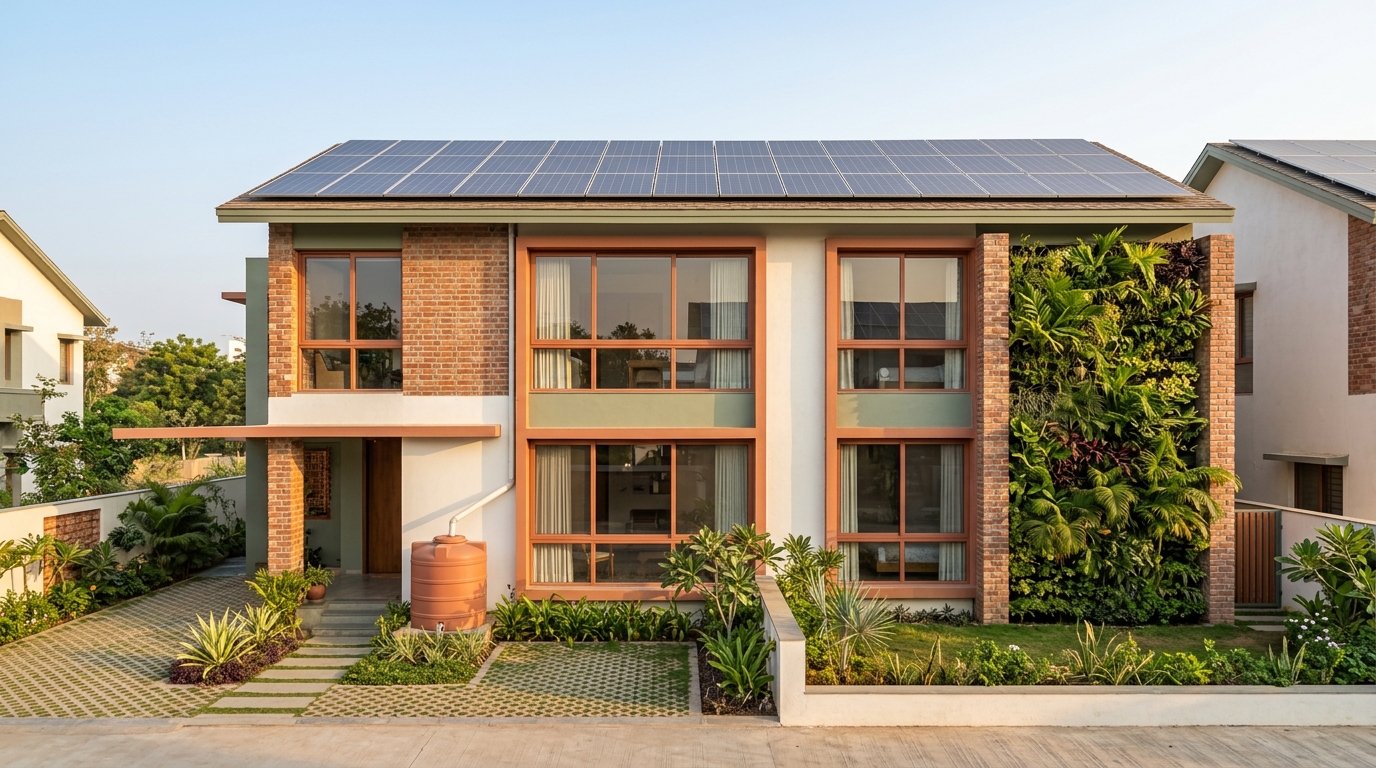
Energy-Efficient House Design in Vadodara: 2026 Guide
If you’re building a new home in Gotri or Waghodia Road, you’ve probably noticed that electricity bills in Vadodara have climbed sharply over the last two summers. An energy-efficient house design in Vadodara isn’t a luxury anymore — it’s a practical decision that saves you money every single month while reducing your environmental footprint. Between Gujarat’s intense heat, rising material costs, and expanding township developments, getting your home’s design right from the foundation up is the smartest investment you can make in 2026. Book a Free Site Visit with our team to assess your plot and start planning an eco-friendly home that performs in Vadodara’s specific climate.
2026 Cost Guide: Energy-Efficient Home Features in Vadodara
One of the first questions homeowners ask is: how much extra does an energy-efficient home actually cost? The honest answer is that green features add 8–20% to your base construction budget upfront, but they typically recover that cost within 4–7 years through reduced utility bills. In Vadodara’s current market, with material inflation running at 12–18% post-2022, planning these features into the original design is far cheaper than retrofitting later.
The table below reflects 2026 Vadodara/Gujarat market rates combining both materials and labor for each energy-efficient feature. Prices vary by locality, plot size, and contractor quality.
| Feature | Low Tier (INR) | Mid Tier (INR) | Premium Tier (INR) |
|---|---|---|---|
| Roof Insulation (per sq ft) | ₹35–₹55 | ₹60–₹90 | ₹95–₹140 |
| Double-Glazed / UPVC Windows (per unit) | ₹8,000–₹12,000 | ₹14,000–₹22,000 | ₹25,000–₹45,000 |
| Solar Panel System (3–5 kW home) | ₹1,20,000–₹1,60,000 | ₹1,70,000–₹2,40,000 | ₹2,50,000–₹4,00,000 |
| Rainwater Harvesting System | ₹25,000–₹45,000 | ₹50,000–₹85,000 | ₹90,000–₹1,60,000 |
| Fly Ash / AAC Block Construction (per sq ft) | ₹180–₹240 | ₹250–₹320 | ₹330–₹420 |
| Cool Roof / Reflective Coating (per sq ft) | ₹18–₹28 | ₹30–₹48 | ₹50–₹80 |
| LED Lighting + Smart Controls (2BHK) | ₹18,000–₹28,000 | ₹30,000–₹55,000 | ₹60,000–₹1,20,000 |
| Cross-Ventilation Design (architectural fee) | ₹15,000–₹25,000 | ₹28,000–₹50,000 | ₹55,000–₹1,00,000 |
Contractor Insight: In Vadodara’s climate, roof insulation and cool roof coatings deliver the fastest ROI — often cutting AC usage by 25–35% in the first summer alone. Prioritize these if your budget is limited.
Material Selection Guide for Vadodara’s Climate
Vadodara experiences extreme summer heat (often touching 43–45°C), moderate winters, and a monsoon season that brings heavy humidity. Material choices must account for all three seasons, not just aesthetics or cost. Using the wrong materials in Gujarat’s climate leads to cracked walls, heat retention, and inflated cooling bills within just a few years.
The most impactful material decisions happen at the structural level — walls, roof, and windows. Getting these right during your ghar bandhkam phase is far more effective than adding green features as an afterthought.
- AAC Blocks (Autoclaved Aerated Concrete): Brands like Siporex and Biltech offer excellent thermal insulation. AAC blocks are 3–4x lighter than red bricks and reduce wall heat transfer by up to 30%.
- Fly Ash Bricks: Locally available across Vadodara and more eco-friendly than traditional clay bricks. Lower embodied energy and better compressive strength.
- UPVC or Aluminum Double-Glazed Windows: Brands like Fenesta and Rehau reduce solar heat gain significantly. Essential for west-facing rooms in Vadodara homes.
- Cool Roof Coatings: Products like Berger CoolCoat or Asian Paints SmartCare reflect solar radiation and reduce roof surface temperature by 15–20°C.
- Terracotta Jali Screens: A traditional Gujarat design element that provides natural shading and ventilation without blocking light — ideal for balconies and corridors.
- Low-VOC Paints: Brands like Dulux EasyCare or Nerolac Impressions Eco Clean reduce indoor air pollution, especially important in sealed, AC-heavy homes.
Pro Tip: For Vadodara’s monsoon season, ensure all eco-friendly wall materials are properly waterproofed. AAC blocks, while excellent insulators, are more porous than traditional bricks and require a quality waterproof plaster finish on exteriors.
Step-by-Step Process: Designing an Energy-Efficient Home
Designing an energy-efficient home isn’t a single decision — it’s a layered process that starts at the plot assessment stage and continues through construction and finishing. Most Vadodara homeowners make the mistake of thinking about green features only after the structure is built, which severely limits what’s possible.
Here’s how a proper energy-efficient home design process unfolds in 2026:
- Phase 1 — Site Analysis (Week 1–2): Assess plot orientation, sun path, prevailing wind direction, and shading from neighboring buildings. In Vadodara, plots facing north or east are naturally advantageous for passive cooling.
- Phase 2 — Passive Design Integration (Week 2–4): Work with your architect to design for cross-ventilation, optimal window placement, shading devices (chajjas, pergolas), and room orientation. Living areas should face north or east; garages and utility rooms can absorb western heat.
- Phase 3 — Material Specification (Week 3–5): Finalize structural materials — AAC blocks vs. fly ash bricks, roofing system, insulation type, and window specifications. Lock these in before any construction begins.
- Phase 4 — Active Systems Planning (Week 4–6): Plan solar panel placement, solar water heater installation, rainwater harvesting pits, and energy-efficient electrical layouts. Conduit routing for solar wiring should be built into the structure.
- Phase 5 — Construction Execution (Month 2–8): Ensure on-site quality checks at each stage — insulation installation, window sealing, roof waterproofing, and plumbing for grey water reuse.
- Phase 6 — Finishing and Commissioning (Month 8–10): Install LED lighting systems, smart meters, cool roof coatings, and conduct a final energy audit before handover.
Contractor Insight: At JKC Buildcon Services, we’ve seen that homeowners who plan passive design features during the drawing stage save 40–60% more energy compared to those who add green features post-construction. The structure itself is your biggest energy tool.
Common Mistakes Homeowners Make
Even well-intentioned homeowners in Vadodara end up with homes that underperform on energy efficiency. These mistakes are almost always preventable — and they’re more common in areas like Karelibaug and Manjalpur where rapid construction timelines create pressure to cut corners.
Mistake 1: Ignoring Plot Orientation
Many homeowners accept whatever floor plan their builder provides without considering which direction the home faces. A west-facing living room in Vadodara will bake in afternoon sun and require heavy AC usage from April through October. Always insist on an orientation study before finalizing your floor plan.
Mistake 2: Choosing Standard Red Bricks to Save Money
Traditional clay bricks are cheaper upfront but conduct heat far more efficiently than AAC or fly ash alternatives — which is the last thing you want in Gujarat’s summer. The upfront saving of ₹15–25 per sq ft on bricks often translates to ₹8,000–₹15,000 extra in annual electricity bills.
Mistake 3: Skipping Roof Insulation
In Vadodara, the roof is the single largest source of heat gain in a home. Skipping insulation to save cost is the most expensive mistake you can make in the long run. A properly insulated roof with a reflective coating can reduce indoor temperatures by 4–6°C without any mechanical cooling.
Mistake 4: Treating Solar as an Add-On
Many homeowners plan to “add solar later” but don’t build the structural and electrical infrastructure for it during construction. Retrofitting solar panels on an existing roof costs 25–40% more than planning for it from the start, and may require structural reinforcement. Plan conduit, wiring routes, and roof load capacity upfront.
- Always get a sun-path analysis for your specific plot in Vadodara
- Budget for AAC or fly ash blocks — the long-term savings justify the upfront cost
- Never skip roof insulation in Gujarat’s climate
- Plan solar infrastructure during the construction phase, not after
Vastu and Eco-Friendly Design Considerations
In Gujarat, Vastu Shastra and passive solar design principles align more than most homeowners realize. The traditional wisdom encoded in Vastu about room orientation, window placement, and courtyard design often reflects centuries of climate adaptation — particularly relevant for Vadodara’s hot, semi-arid conditions.
Understanding how to merge Vastu guidelines with modern energy-efficient design can help you get a home that satisfies both traditional values and practical comfort goals.
- Northeast Entry (Vastu) + North-East Orientation (Solar): Both Vastu and passive solar design recommend the main entry and living spaces face north or northeast. This minimizes direct afternoon sun exposure while maximizing natural light.
- Brahmasthana (Central Courtyard): The traditional Gujarati chowk or central open space acts as a natural heat chimney, drawing hot air upward and out while pulling cooler air in from shaded sides. This is passive cooling at its most elegant.
- Kitchen in Southeast (Vastu): Placing the kitchen in the southeast aligns with morning sun exposure, which is gentle and appropriate. It also keeps cooking heat away from bedrooms and living areas.
- Heavy Walls on West and South: Vastu recommends thicker, heavier walls on the south and west — which also happens to be the best thermal mass strategy for blocking afternoon heat in Vadodara.
- Water Bodies in Northeast: Underground water tanks or rainwater harvesting pits in the northeast (as Vastu suggests) are also ideal from a structural standpoint, avoiding the load-bearing zones of the building.
Pro Tip: When doing a makaan renovation or new construction in Vadodara, don’t assume Vastu and green design conflict. Bring both your Vastu consultant and your contractor into the same room early — the overlap is significant and the combined result is a home that performs better on every level.
Maintenance Guide: Keeping Your Green Home Performing
An energy-efficient home requires periodic maintenance to sustain its performance. Many Vadodara homeowners invest in green features during construction and then neglect them, watching efficiency drop year by year. A simple annual maintenance routine keeps your home performing at its best.
Think of it like maintaining your car — a ₹5,000 annual service prevents a ₹50,000 breakdown. The same logic applies to your home’s energy systems.
Annual Maintenance Checklist
- Solar Panels: Clean panels every 3 months in Vadodara (dust accumulation reduces output by 15–25%). Check inverter performance and wiring connections annually.
- Cool Roof Coating: Inspect for cracks or peeling after each monsoon season. Reapply reflective coating every 5–7 years for sustained performance.
- Rainwater Harvesting System: Clean filters and sedimentation tanks before each monsoon. Check recharge pit capacity and inlet screens annually.
- UPVC/Double-Glazed Windows: Clean frames and check seals every 6 months. Replace worn weatherstripping to prevent air leakage that defeats insulation benefits.
- Insulation Integrity: Check roof insulation for moisture damage or rodent intrusion every 2 years. Wet insulation loses up to 80% of its thermal performance.
- LED and Smart Systems: Update smart home firmware annually and replace any failed LED fixtures promptly — mismatched lighting loads affect overall system efficiency.
Post-Monsoon Checks (Every Year)
- Inspect all exterior waterproofing for cracks or bubbling
- Check terrace drainage to prevent water logging on insulated roofs
- Verify that all window seals are intact after thermal expansion cycles
- Test solar water heater pressure relief valves
Contractor Insight: For homeowners who’ve done a ghar sudharo or floor extension in Vadodara, always check that new additions are thermally integrated with the existing structure. Gaps between old and new sections are a major source of heat ingress that’s easily overlooked.
How to Choose the Right Contractor in Vadodara
Choosing the wrong contractor for an energy-efficient home project is costly in ways that go beyond money. A contractor who doesn’t understand passive design, insulation installation, or solar integration can actually make your home less efficient than a standard build. In Vadodara’s growing construction market, not every contractor who claims green expertise actually has it.
Here are 5–6 practical criteria to vet any contractor before signing:
- Ask for Completed Green Projects: Request photos and addresses of homes they’ve built with energy-efficient features. Ask if you can speak to those homeowners. A credible contractor will have no hesitation.
- Check Material Knowledge: Ask them specifically about AAC blocks, cool roof coatings, and UPVC window installation. If they’re vague or recommend only what they’re familiar with, that’s a red flag.
- Transparent Itemized Quotes: Any reputable contractor should provide a detailed, itemized quote that separates material costs from labor costs for each green feature. Lump-sum quotes make it impossible to verify value.
- Experience with Vadodara’s Climate: Local experience matters. A contractor who has built in Gotri, Alkapuri, or Waghodia Road understands the specific sun angles, wind patterns, and monsoon waterproofing challenges of this city.
- References from Similar Projects: Ask specifically for references from clients who built energy-efficient or eco-friendly homes — not just standard construction projects.
- Post-Completion Support: A good contractor offers a maintenance walkthrough and a warranty period on their work. Ask specifically what happens if your cool roof coating peels or your rainwater system blocks within the first year.
At JKC Buildcon Services, every project comes with fully transparent pricing, a written scope of work, and post-completion support — backed by 25+ years of construction experience in Vadodara. Ready to get started? schedule your free site visit and we’ll walk your plot with you to identify the best energy-efficient design opportunities.
Frequently Asked Questions
Q1: How much does it cost to build an energy-efficient house in Vadodara in 2026?
Building an energy-efficient home in Vadodara typically adds 8–20% to your base construction cost, depending on the features you include. For a 1,500 sq ft home, this translates to an additional ₹3–8 lakh over a standard build. However, energy savings of ₹25,000–₹60,000 per year (depending on solar, insulation, and cooling efficiency) typically recover this investment within 4–7 years. In 2026’s market, with electricity tariffs rising in Gujarat, the payback period is shortening year over year.
Q2: Is solar panel installation worth it for a home in Vadodara?
Absolutely — Vadodara receives approximately 300+ sunny days per year, making it one of the best locations in India for solar energy. A 3 kW system can offset 60–80% of a typical household’s electricity consumption and pays back within 5–6 years at current Gujarat electricity rates. Gujarat’s net metering policy also allows you to sell excess power back to the grid, further improving ROI. With the PM Surya Ghar Muft Bijli Yojana subsidy available in 2026, upfront costs are significantly reduced for eligible homeowners.
Q3: What are the best eco-friendly building materials available in Vadodara?
AAC blocks, fly ash bricks, and UPVC double-glazed windows are the most impactful eco-friendly materials available locally in Vadodara. AAC blocks from brands like Siporex provide superior thermal insulation compared to traditional clay bricks and are widely available in the Vadodara market. For roofing, a combination of PUF (Polyurethane Foam) insulation boards and cool roof reflective coatings delivers the best heat reduction results in Gujarat’s climate. Low-VOC paints from Berger or Nerolac are also recommended for healthier indoor air quality in sealed, AC-heavy homes.
Q4: Can I make my existing Vadodara home more energy-efficient without rebuilding?
Yes — there are several high-impact retrofits you can apply to an existing home without major reconstruction. Cool roof coatings, solar panel installation, LED lighting upgrades, and UPVC window replacement are all viable retrofits. Adding external shading devices like chajjas, pergolas, or terracotta jali screens on west-facing walls can also significantly reduce heat gain. For a more comprehensive ghar sudharo, adding roof insulation during a terrace waterproofing project is one of the best value-for-money upgrades available in Vadodara’s market in 2026.
Q5: Do energy-efficient homes require special permits in Vadodara?
Standard construction permits from the Vadodara Municipal Corporation (VMC) apply to all new home construction regardless of green features. Solar panel installations above a certain capacity may require a net metering application with DGVCL (Dakshin Gujarat Vij Company Limited). Rainwater harvesting systems are not only permitted but actively encouraged by Vadodara’s Smart City mission — some township developments even mandate them. Always verify current VMC guidelines with your contractor before finalizing your design, as regulations in 2026 continue to evolve with Gujarat’s green building push.
Conclusion
Building an energy-efficient home in Vadodara in 2026 is one of the smartest decisions you can make — financially, practically, and for the long-term comfort of your family. From choosing the right structural materials during your ghar bandhkam phase to integrating solar, rainwater harvesting, and passive cooling design, every decision compounds into a home that costs less to run, stays cooler naturally, and holds its value better in Vadodara’s rapidly appreciating real estate market.
The key is working with a contractor who genuinely understands Vadodara’s climate, local material availability, and the technical requirements of green construction — not just someone who uses the word “eco-friendly” in their pitch. JKC Buildcon Services has been building and renovating homes in Vadodara for 25+ years, with a reputation built on transparent pricing, quality materials, and craftsmanship that stands up to Gujarat’s demanding seasons.
Whether you’re starting a new build in Waghodia Road, planning a floor extension, or retrofitting your existing home with energy-efficient upgrades, our team is ready to walk your site and give you an honest, detailed assessment. get a free on-site consultation today and let’s design a home that works smarter for you — every single day.