



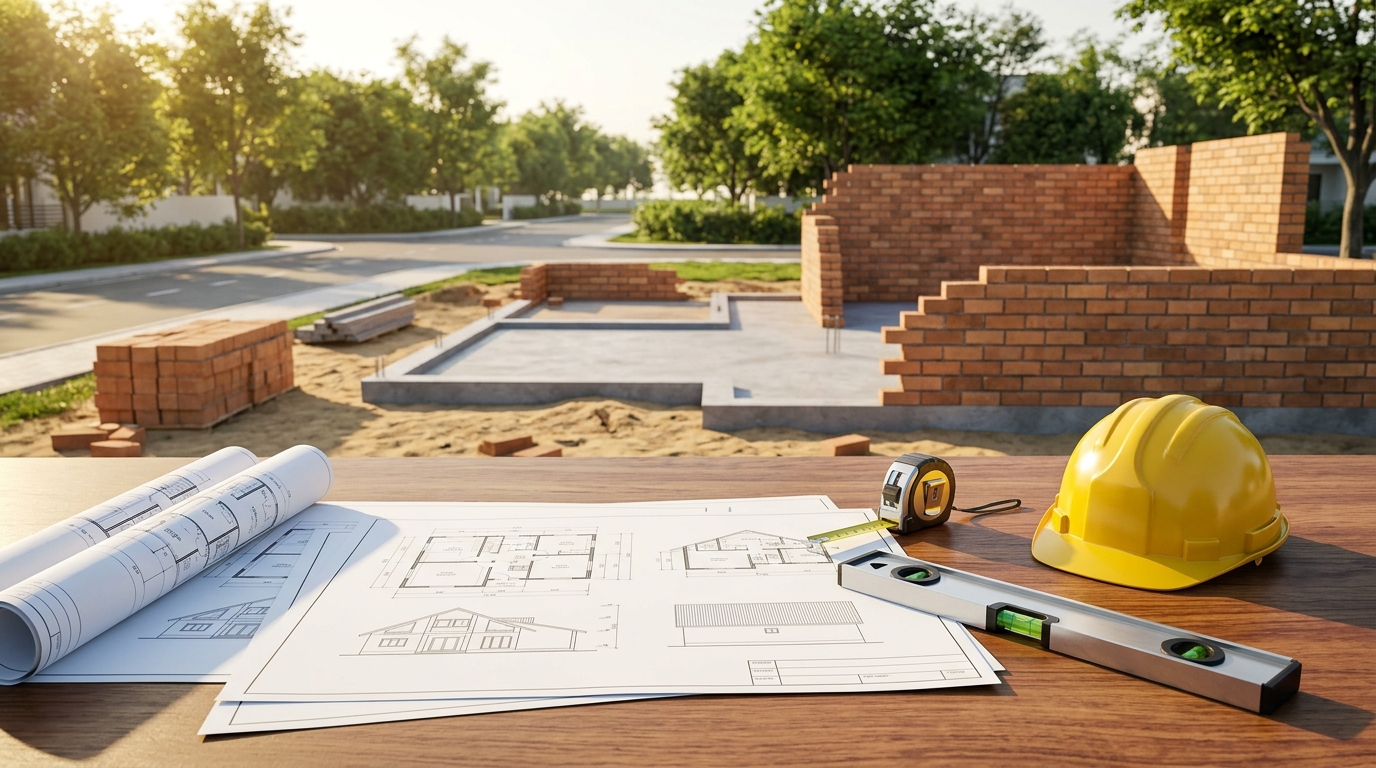
What to Consider Before Building a House in Vadodara 2026
Every week, families in areas like Gotri, Waghodia Road, and Harni start the process of building a house in Vadodara without a clear plan — and end up spending 20–30% more than budgeted. Material costs in Gujarat have risen sharply since 2022, and in 2026, the stakes are even higher with new township zones and Smart City regulations changing what you can and cannot build. Before you pour a single bag of cement, there are critical decisions around land, approvals, materials, and contractors that will define the quality and cost of your home for decades. Book a Free Site Visit with our team to start your project on the right foot.
2026 House Construction Cost Guide for Vadodara
Understanding the real cost of building a house in Vadodara in 2026 is the most important starting point. Costs vary significantly based on location, soil type, design complexity, and material grade. The table below reflects current Vadodara and Gujarat market rates including both material and labor costs combined.
Post-2022 inflation has pushed cement, steel, and sand prices up by 12–18% across Gujarat. In 2026, a mid-range 1,000 sq ft home in Vadodara costs considerably more than it did three years ago. Budget accordingly and always add a 10–15% contingency buffer to your total estimate.
| Construction Type | Low Budget (Economy) | Mid Range (Standard) | Premium (Luxury) |
|---|---|---|---|
| Basic Structure (per sq ft) | ₹1,400 – ₹1,700 | ₹1,800 – ₹2,200 | ₹2,500 – ₹3,500+ |
| Flooring (tiles/marble, per sq ft) | ₹60 – ₹100 | ₹110 – ₹200 | ₹220 – ₹500+ |
| Plumbing (per toilet/bathroom) | ₹18,000 – ₹28,000 | ₹30,000 – ₹50,000 | ₹55,000 – ₹1,00,000+ |
| Painting (interior, per sq ft) | ₹18 – ₹25 | ₹28 – ₹40 | ₹45 – ₹80+ |
| POP / False Ceiling (per sq ft) | ₹55 – ₹75 | ₹80 – ₹120 | ₹130 – ₹250+ |
| Complete 1,000 sq ft Home (all-in) | ₹16 – ₹20 Lakh | ₹22 – ₹32 Lakh | ₹35 – ₹55 Lakh+ |
Contractor Insight: In Vadodara’s newer zones like Waghodia Road and Gotri, soil testing and foundation reinforcement can add ₹1–₹2 lakh to your base cost. Never skip this step to save money upfront.
Permits and Legal Requirements in Vadodara
Before any ghar bandhkam begins in Vadodara, you must have your legal paperwork in order. Skipping approvals is one of the most expensive mistakes a homeowner can make — it can result in demolition orders, heavy fines, or inability to sell the property later. In 2026, Vadodara’s regulatory environment is stricter than ever due to Smart City compliance requirements.
VMC and VUDA Approvals
The Vadodara Municipal Corporation (VMC) and Vadodara Urban Development Authority (VUDA) are the two primary bodies that govern residential construction approvals. Depending on your plot’s location — within VMC limits or VUDA jurisdiction — the approval process and fees differ. Most plots within city limits require a Building Use Permission (BUP) before construction starts.
Key documents you will need include your NA (Non-Agricultural) order, title deed, site plan, and structural drawings signed by a licensed engineer. The approval process typically takes 30–90 days in 2026, so factor this into your project timeline. Starting construction without these approvals risks legal action and can delay your project by months.
- NA Order: Mandatory if your land was previously agricultural
- Building Plan Approval: Required from VMC or VUDA before foundation work
- Structural Stability Certificate: Signed by a registered civil engineer
- Water and Drainage Connection NOC: Required from VMC for new builds
- Fire NOC: Mandatory for buildings above G+2 floors
RERA Compliance and Layout Permissions
If you are buying a plot in a new township or layout, verify that the developer has RERA registration and that the layout has received government approval. Many plots sold in peripheral areas of Vadodara in 2024–2026 lack proper layout sanctions, which creates problems at the BUP stage. Always check the Gujarat RERA portal before purchasing land for construction.
Pro Tip: Hire a local architect or civil consultant who is familiar with VMC’s 2026 building bylaws. The Floor Space Index (FSI) rules and setback requirements have been updated, and a knowledgeable professional will ensure your design stays compliant from day one.
Vastu and Design Considerations for Vadodara Homes
In Vadodara, Vastu Shastra remains a deeply important consideration for most homeowners, particularly in traditional Gujarati families. Beyond cultural beliefs, Vastu principles often align with practical design logic — proper orientation, ventilation, and light distribution. Getting the design right from the start avoids costly structural changes later.
Core Vastu Principles for Ghar Bandhkam
The most critical Vastu decision is the main entrance direction — east and north-facing entrances are considered most auspicious and also happen to allow better morning light in Vadodara’s east-west oriented streets. The kitchen should ideally be in the southeast, and the master bedroom in the southwest for structural and Vastu alignment. Share your plot orientation with your architect early so these requirements are built into the design, not retrofitted.
- Main gate and entrance: East or North facing preferred
- Kitchen placement: Southeast corner
- Master bedroom: Southwest
- Pooja room: Northeast corner, ideally on ground floor
- Staircase: Avoid center of the house; south or west preferred
- Overhead water tank: Southwest for structural load balance
Design for Vadodara’s Climate
Vadodara experiences extreme heat from April to June, with temperatures regularly crossing 42°C. Your home design must account for this with adequate wall thickness (9-inch brick walls minimum), cross-ventilation in every room, and shaded west-facing windows. Roof insulation is not optional — a poorly insulated RCC roof can raise indoor temperatures by 5–8°C during peak summer.
Monsoon waterproofing is equally critical. Vadodara receives significant rainfall, and flat terraces without proper waterproofing treatment develop leaks within 2–3 years. Specify Dr. Fixit or STP waterproofing systems for your terrace and basement areas from the start. Good design anticipates both summer heat and monsoon stress simultaneously.
Contractor Insight: In Vadodara’s newer residential zones, many homeowners are opting for cavity wall construction — a double-wall system with an air gap — which significantly reduces heat transfer and lowers air conditioning costs long-term.
Material Selection Guide for Vadodara Construction
The materials you choose will determine the durability, maintenance cost, and comfort of your home for the next 30–50 years. In Gujarat’s climate, not all materials perform equally. Choosing the wrong grade of cement or the wrong tile type can lead to premature cracking, staining, or structural weakness.
Structural and Foundation Materials
For foundation and structural work in Vadodara, OPC 53-grade cement from brands like UltraTech, ACC, or Ambuja is the standard recommendation. TMT steel bars of Fe500D grade offer superior ductility and are preferred for earthquake-prone zones — Gujarat falls in Seismic Zone III. Never compromise on steel quality to save ₹5–₹10 per kg; the long-term risk is not worth it.
- Cement: UltraTech or Ambuja OPC 53 grade — ₹380–₹420 per bag (2026 rates)
- Steel: TATA Tiscon or Kamdhenu Fe500D TMT bars
- Bricks: Fly ash bricks preferred over red clay for thermal insulation
- Sand: Specify M-sand (manufactured sand) to avoid river sand quality issues
- Aggregate: 20mm and 40mm crushed stone for RCC work
Finishing Materials for Gujarat Climate
For flooring, vitrified tiles (600x600mm or 800x800mm) from brands like Kajaria, Somany, or Asian Granito are the dominant choice in Vadodara homes in 2026. They are heat-resistant, easy to clean, and durable under Gujarat’s temperature extremes. For bathrooms, anti-skid ceramic tiles of at least R10 slip-resistance rating are essential for safety.
For exterior walls, texture paint or cement-based exterior finishes from Asian Paints Apex or Berger WeatherCoat outperform standard paint in Vadodara’s UV-intense summers. Interior walls benefit from POP (Plaster of Paris) finishing before painting for a smooth, long-lasting surface. JKC Buildcon Services consistently recommends these material combinations based on 25+ years of local construction experience.
Common Mistakes Homeowners Make When Building in Vadodara
After decades of construction work across Vadodara, certain mistakes come up repeatedly. These are not minor oversights — they are decisions that cost homeowners lakhs of rupees in corrections and repairs. Knowing these mistakes in advance is the best protection against them.
Mistake 1: Finalizing the design after construction begins. Many families start excavation before the architectural drawings are fully finalized. This leads to mid-construction design changes that require demolishing completed work. Always finalize every room dimension, door position, and electrical point layout before breaking ground.
Mistake 2: Hiring the cheapest contractor without verifying credentials. A quote that is 20–25% below market rate almost always means either substandard materials, underpaid and unskilled labor, or both. In the ghar sudharo space, the cost of fixing poor workmanship is always higher than the original saving.
Mistake 3: Skipping soil testing. Vadodara has varied soil conditions — black cotton soil in some areas, rocky terrain in others. Without a proper soil investigation report, your structural engineer cannot design the correct foundation type. Inadequate foundations lead to settlement cracks within 3–5 years.
Mistake 4: Underestimating electrical and plumbing rough-in costs. Most homeowners budget heavily for structure and finishing but forget that concealed electrical conduit work, plumbing lines, and drainage must all be planned and executed during construction — not after. Retrofitting these systems post-construction costs 3–4 times more and involves breaking finished walls.
- Always finalize complete architectural and structural drawings before starting
- Get at least 3 contractor quotes and verify each one’s past work
- Invest ₹8,000–₹15,000 in a soil test — it can save ₹2–₹5 lakh in foundation corrections
- Plan all MEP (mechanical, electrical, plumbing) during the structural stage
- Never make verbal agreements — get everything in a written contract with payment milestones
Pro Tip: A detailed Bill of Quantities (BOQ) prepared before construction begins is the single most effective tool for controlling costs and avoiding disputes with contractors. Insist on this document from any contractor you hire.
Timeline and Project Phases for Building a House in Vadodara
One of the most common frustrations homeowners experience is a project that takes twice as long as promised. Understanding realistic timelines for each phase helps you plan your finances, rental arrangements, and move-in date accurately. In 2026, material supply chains in Gujarat are relatively stable, but skilled labor availability can still cause delays.
Pre-Construction Phase
The pre-construction phase — including land verification, design, approvals, and soil testing — typically takes 2–4 months in Vadodara. VMC building plan approvals alone can take 30–60 days. Use this time productively to finalize your material specifications, shortlist contractors, and arrange construction financing.
- Week 1–2: Land title verification, NA order check, soil testing
- Week 3–6: Architectural design and structural drawing preparation
- Week 7–14: VMC/VUDA building plan submission and approval
- Week 15–16: Contractor finalization, BOQ review, contract signing
Construction and Finishing Phases
For a standard G+1 residential home (1,500–2,000 sq ft built-up area) in Vadodara, the construction timeline from foundation to handover is typically 10–14 months. Structural work takes 4–5 months, brick and plaster work takes 2–3 months, and finishing (flooring, painting, POP, plumbing fixtures, electrical) takes 3–4 months. Monsoon season (June–September) can slow exterior work, so plan your foundation and structural phase to be complete before the rains.
| Phase | Activities | Estimated Duration |
|---|---|---|
| Foundation and Plinth | Excavation, footing, plinth beam, backfill | 6–8 weeks |
| Structural Frame | Columns, beams, RCC slabs (per floor) | 8–12 weeks |
| Brick and Plaster | Brick masonry, internal and external plaster | 8–10 weeks |
| MEP Rough-In | Electrical conduits, plumbing lines, drainage | 3–4 weeks (concurrent) |
| Finishing Work | Flooring, tiles, POP, painting, fixtures | 10–14 weeks |
| Final Handover | Snag list, cleaning, BUP completion certificate | 2–3 weeks |
Contractor Insight: Teams like JKC Buildcon Services use milestone-based payment schedules tied to actual completion stages — this keeps both the contractor and homeowner accountable and prevents cash flow misuse on site.
How to Choose the Right Contractor in Vadodara
Choosing the right contractor is arguably more important than any material or design decision you make. A skilled, honest contractor can deliver a beautiful home within budget; an unreliable one can drain your savings and deliver a structurally compromised building. Here are five practical criteria to vet any contractor before signing a contract.
1. Verify completed projects in Vadodara specifically. Ask for addresses of at least 3–5 completed homes in Vadodara that you can physically visit. Speaking to past clients gives you real insight into workmanship quality, timeline adherence, and post-completion support. A contractor who hesitates to provide references is a red flag.
2. Confirm they provide a detailed written contract and BOQ. Any professional contractor should provide a Bill of Quantities (BOQ) with itemized rates for every material and labor component. Vague lump-sum quotes with no breakdowns are a recipe for disputes and hidden costs later.
- Check for GST registration — legitimate contractors issue proper tax invoices
- Verify years of local experience — Vadodara-specific knowledge of soil, climate, and VMC rules matters
- Confirm they use full-time skilled labor, not just daily wage workers with no accountability
- Ask about their material procurement process — do they buy directly from manufacturers or through middlemen?
- Ensure they offer a post-construction warranty for structural defects (minimum 1 year)
JKC Buildcon Services, co-founded by Kantibhai R C and Chintan K C, has built its reputation in Vadodara on 100% transparent pricing, written contracts, and on-time delivery. With 25+ years in the local market, they understand the specific challenges of floor extension Vadodara projects, new construction, and complete home renovations. You can schedule your free site visit today to discuss your project requirements with their team directly.
Frequently Asked Questions About Building a House in Vadodara
Q1: What is the current cost of building a house in Vadodara in 2026?
In 2026, the cost of building a house in Vadodara ranges from approximately ₹1,400–₹1,700 per sq ft for economy construction to ₹2,500–₹3,500+ per sq ft for premium builds, including both materials and labor. For a complete 1,000 sq ft home with standard finishes, you should budget between ₹22–₹32 lakh. Material cost inflation of 12–18% post-2022 means these figures are significantly higher than pre-2022 estimates you may find online. Always get a current, itemized quote from a licensed contractor before finalizing your budget.
Q2: Do I need VMC approval before starting construction in Vadodara?
Yes, VMC (Vadodara Municipal Corporation) building plan approval is mandatory before starting any new construction within city limits. Building without approval can result in a stop-work notice, demolition order, or significant fines. The approval process requires submitting architectural drawings, a structural stability certificate, NA order (if applicable), and other documents. In 2026, the process typically takes 30–60 days if all documents are in order. Hiring a local architect familiar with VMC’s current bylaws will speed up this process considerably.
Q3: How long does it take to build a house in Vadodara?
For a standard G+1 residential home of 1,500–2,000 sq ft, the total timeline from breaking ground to handover is typically 10–14 months in Vadodara. Pre-construction approvals and design work add another 2–4 months. Monsoon season (June–September) can slow exterior and structural work, so projects that begin foundation work in October–November tend to progress faster. Delays are most commonly caused by late design changes, material procurement issues, and labor shortages — all of which can be mitigated with proper upfront planning.
Q4: Is Vastu important when building a house in Vadodara?
For most Vadodara families, especially traditional Gujarati households, Vastu Shastra is an important consideration when planning a new home. Beyond cultural significance, many Vastu guidelines align with practical design principles — east-facing entrances allow morning light, southeast kitchens improve ventilation, and southwest master bedrooms are structurally sound positions. The key is to incorporate Vastu requirements into your architectural design from the beginning, not as an afterthought. Most experienced local architects and contractors in Vadodara are familiar with Vastu requirements and can integrate them without compromising modern design.
Q5: What are the biggest hidden costs when building a house in Vadodara?
The most common hidden costs in Vadodara home construction include soil testing and foundation upgrades (₹50,000–₹2 lakh depending on soil conditions), VMC approval fees and architect charges (₹1–₹3 lakh), electrical and plumbing rough-in work (often underestimated in initial quotes), exterior compound wall and gate construction, and landscaping and driveway finishing. Material price escalation during a long project is another significant hidden cost — locking in material prices through a fixed-price contract or buying key materials early can protect against this. Always add a 10–15% contingency to your total budget from day one.
Conclusion: Build Smart, Build Right in Vadodara
Building a house in Vadodara in 2026 is one of the most significant investments you will make in your lifetime. The decisions you make before a single brick is laid — about approvals, design, materials, and contractor selection — will determine whether your home is a source of pride or a source of stress for years to come. The good news is that with the right team and the right planning process, building a beautiful, durable, Vastu-compliant home in Vadodara is entirely achievable within a realistic budget.
JKC Buildcon Services has been helping Vadodara families navigate every stage of this journey for over 25 years. From the initial site assessment and VMC approval guidance to structural construction, tiles work, POP, painting, and final handover — their team brings local expertise, transparent pricing, and genuine accountability to every project. Co-founded by Kantibhai R C and Chintan K C, the company’s reputation is built on delivering homes that stand the test of time and Gujarat’s demanding climate.
Whether you are starting from scratch on a new plot in Gotri or planning a makaan renovation in an established neighborhood, the first step is a conversation with people who know Vadodara construction inside out. get a free on-site consultation from the JKC Buildcon Services team today and take the first step toward building the home your family deserves.